
Why Is My Sourdough Dough So Sticky? How to Handle Wet Dough
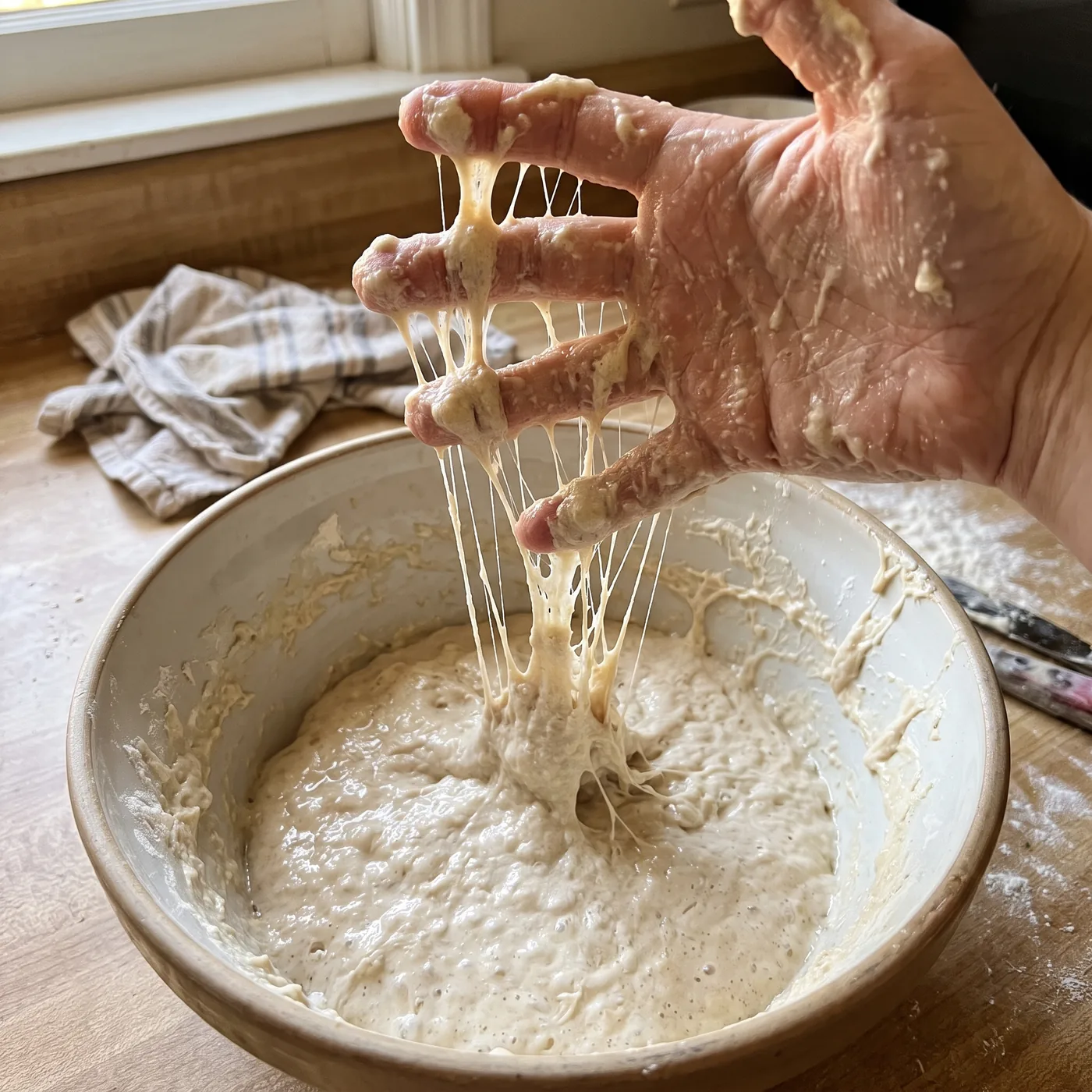
A little stickiness is normal: sourdough is usually a wetter, higher-hydration dough than regular bread, so it feels tacky — especially early on. It's only a problem when the dough stays slack and gluey and never firms up as you fold it. The usual causes, in the order worth checking, are hydration that's too high for your flour, under-developed gluten, a too-warm dough, over-fermentation, or a young starter. Fix those — don't just bury the dough in flour, which only makes a drier, denser loaf.
Few things rattle a new sourdough baker more than a bowl of dough that behaves like glue — stuck to your hands, stuck to the counter, impossible to shape. The instinct is to reach for more flour. Usually that's the wrong move. Most "sticky dough" is either completely normal for the hydration you're working at, or a symptom of one specific fixable thing. Once you can tell which, wet dough stops being scary and starts being the dough that gives you that open, airy crumb.
BakeSide's take. "Why is my dough so sticky?" is one of the first panics new bakers bring to BakeSide. Almost every time, the dough is fine — it's high-hydration dough being handled like low-hydration dough. The fix is rarely more flour; it's a different technique and a little patience.
First: is it actually a problem?
Before you change anything, figure out which kind of sticky you have. They need opposite responses.
- Normal-sticky (leave it alone): the dough is tacky right after mixing and during the first folds, but with each stretch-and-fold it gets smoother, stronger and less clingy, and it starts to hold a shape. This is exactly what high-hydration dough is supposed to do. Trust the process.
- Problem-sticky (something's off): the dough stays slack, wet and gluey no matter how much you fold it, tears instead of stretching, spreads into a puddle, or was manageable and then suddenly turned slurpy and un-shapeable. That's a signal — and the rest of this guide is how to read it.
A useful rule: dough should get less sticky as gluten develops. If it's going the wrong way — getting wetter and slacker over time — the problem is usually fermentation (too warm, too long) rather than hydration.
The 5 real causes of sticky dough
1. Hydration is too high for your flour
Hydration is the weight of water as a percentage of flour. Sourdough commonly runs around 70–78% hydration, which is genuinely wet — a 75% dough should feel sticky. But hydration is only half the story; the flour is the other half. Higher-protein bread flour absorbs more water and builds stronger gluten than all-purpose, so it can carry 75% comfortably where all-purpose would turn to soup. Whole-grain and freshly-milled flours drink even more water.
What to do: if you're new, start lower — around 65–70% hydration — and climb as your handling improves. Use bread flour (roughly 12–13% protein) rather than all-purpose (around 10–11%) for wetter doughs. And double-check your math: your starter brings its own flour and water, so a dough you think is 75% can quietly run a few points higher once you count it — sometimes enough to tip an already-wet dough into hard-to-handle territory.
2. The gluten isn't developed yet
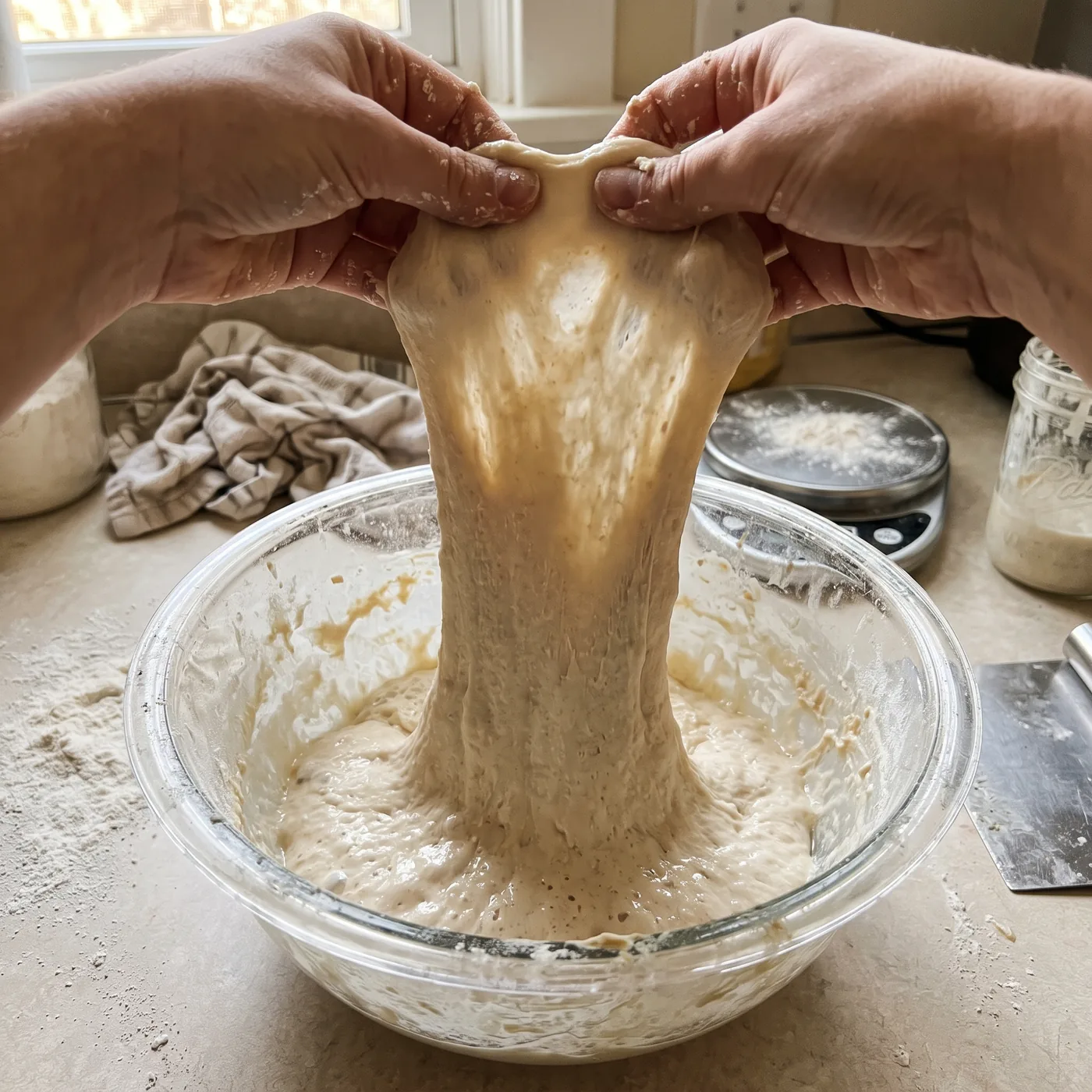
Wet dough needs a strong gluten network to hold all that water in place. Early on, before the gluten is built, the water has nowhere to go but onto your hands. The two biggest levers:
- Autolyse (or fermentolyse). Mix just the flour and water (fermentolyse includes the starter) and let it rest 30 minutes to 2 hours before adding salt and working it. The flour fully hydrates on its own, gluten starts forming passively, and the dough turns noticeably less sticky with zero effort.
- Stretch-and-folds. A set of folds every 30–45 minutes through early bulk builds strength fast. You'll feel the dough tighten and smooth out set over set. Skipping or under-doing folds is the single most common reason dough "won't stop being sticky."
3. The dough is too warm
Heat speeds fermentation, and fast fermentation outruns gluten development — so the dough slackens and gets stickier. A hot kitchen, warm water, or a long summer afternoon can all push dough past where you want it. Temperature is the lever that moves everything in sourdough.
What to do: aim for a final dough temperature around 24–26°C (75–79°F) and use cooler water when your kitchen is warm to hit it. If the dough is getting slacker and wetter as bulk goes on, it's fermenting too fast — cool it down (even a short spell in the fridge) and watch it recover some structure.
4. It's over-fermented (over-proofed)
This is the sticky that sneaks up on you: the dough handled fine, then at shaping it's suddenly slurpy, slack and tearing. When dough ferments too far, the acids and enzymes break down the gluten, and a broken gluten network can't hold water — so the dough weeps and sticks. Over-proofing is the most common cause of a dough that gets worse, not better, over time.
What to do: shorten bulk, lower the temperature, or use the fridge to slow it down — and learn to read when fermentation is actually done rather than baking by the clock. That's its own skill: how to tell when your dough is done proofing →.
5. A young or weak starter
A starter that isn't strong and active yet ferments weakly and unpredictably, which leaves dough slack and sticky and refusing to build structure. If your dough is consistently a mess and your loaves aren't rising well, start upstream with the starter rather than the dough.
What to do: make sure you're building dough with a starter that's recently fed and at its lively peak. If it's sluggish, fix that first: how to read, fix and feed your starter →.
BakeSide's take. Show BakeSide your dough and tell it your flour, hydration and temperature, and it helps you pin down whether you're looking at normal high-hydration tack or a fermentation that got away from you — so you know whether to keep folding or to cool it down.
How to actually handle wet dough
Half of "sticky dough" isn't a dough problem at all — it's a technique problem. High-hydration dough is handled differently from stiff dough. Do it their way and even a 78% dough becomes cooperative.
| Technique | Why it works |
|---|---|
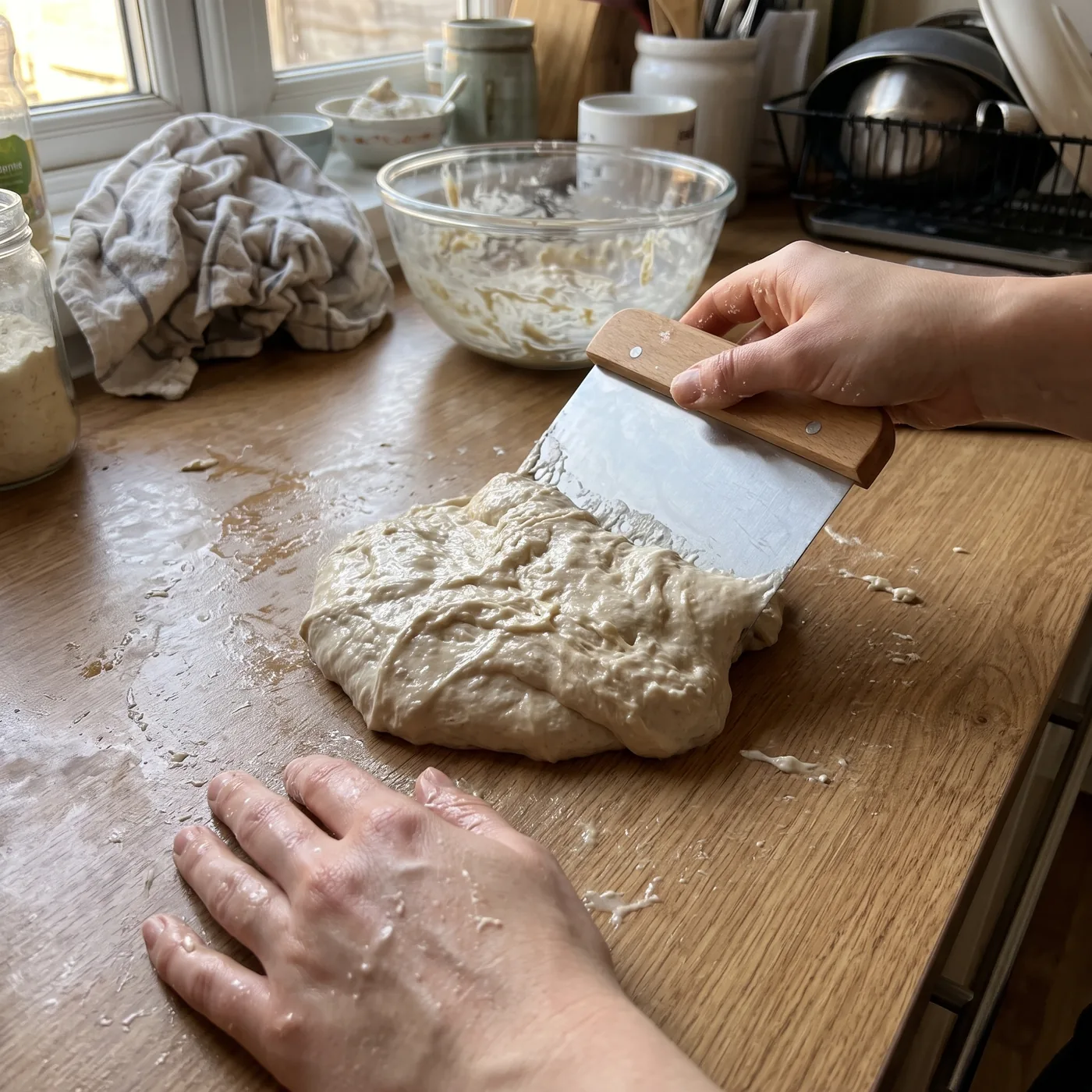
| Wet your hands, not flour them | Wet dough sticks to dry skin and slides off wet skin. Keep a bowl of water nearby and re-wet often. |
| Use a bench scraper | A metal scraper lifts, folds and turns dough without it gluing to your fingers. It's the single best tool for wet dough. |
| Move quickly and decisively | Slow, timid handling drags and tears. Confident, fast moves give the dough less time to stick. |
| Mist the surface, don't flour it | A lightly damp counter can beat a floured one for shaping very wet dough — and it doesn't change your hydration. |
| Add flour only sparingly | A light dusting for the final shape is fine; kneading in extra flour to "fix" stickiness lowers hydration and dries the crumb. |
| Build strength before shaping | Good tension at pre-shape and a bench rest make the final shape far less sticky than wrestling slack dough straight from the bowl. |
The honest long game: start at a lower hydration, get comfortable, and climb. Experienced bakers use less and less flour on the bench not because their dough is drier, but because their hands have learned the dough. Wet dough is a skill, and it comes faster than you'd think.
Sticky at different stages means different things
- Sticky right after mixing: normal. The flour hasn't absorbed the water yet and the gluten isn't built. Autolyse and the first folds will transform it.
- Sticky through early bulk but improving: normal and on track. Keep folding; it's doing exactly what it should.
- Getting slacker and wetter as bulk goes on: warning sign — too warm and/or over-fermenting. Cool it and don't let bulk run long.
- Slurpy and un-shapeable at shaping: usually over-proofed, or under-developed gluten (too few folds). Next time, more strength earlier and a shorter/cooler bulk.
- Sticky to shape but you added lots of flour: you may have over-floured and tightened it; the loaf can come out dense. Lean on wet hands and a scraper instead.
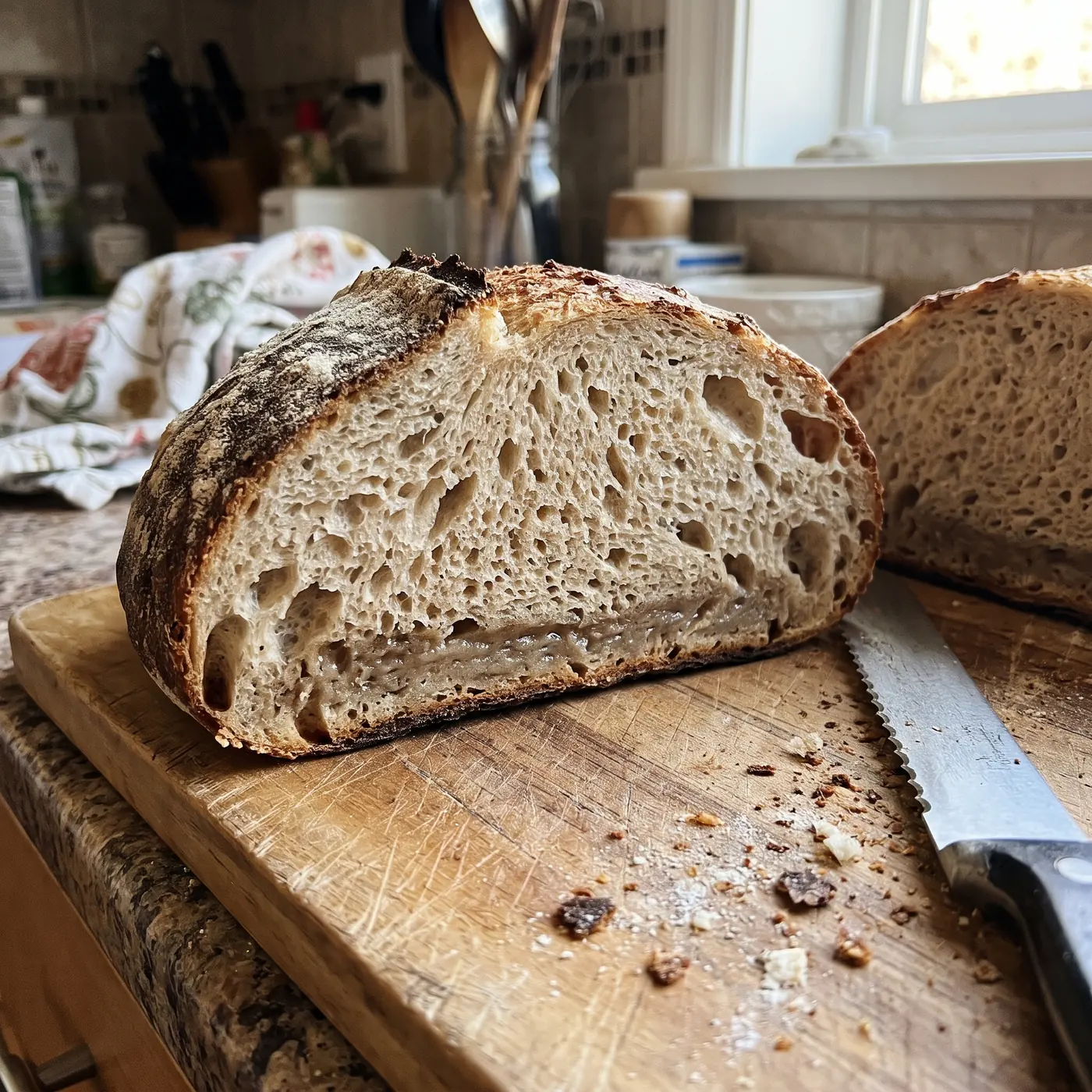
"It's still sticky and gummy after baking"
This is a different problem from a sticky dough, and it happens after the oven — so the handling tips above won't touch it. A gummy, tacky, under-set crumb almost always comes down to one of three things:
- Under-baked. The loaf needs longer, or a hotter, more committed bake. Bake until it's deeply coloured and the internal temperature reads high — many bakers pull at around 96–99°C (205–210°F) in the centre.
- Sliced too soon. The crumb finishes setting as it cools. Cutting a warm loaf gives you a gummy, claggy crumb even when it's perfectly baked. Let it cool completely — ideally a couple of hours — before the first slice.
- Under-proofed (or over-proofed). Both ends of the proofing spectrum can leave a dense, gummy band. If the bake and the cooling are right and it's still gummy, look back at fermentation: over-proofed vs under-proofed, how to tell →.
The quick fix checklist
Dough fighting you? Run through these in order:
- Is it improving with folds? If yes, it's normal — keep going.
- Did you autolyse and do enough folds? If not, that's your gluten fix.
- Check the flour. Bread flour over all-purpose for wet doughs; recalculate real hydration including the starter.
- Check the temperature. Aim ~24–26°C; use cooler water in a warm kitchen.
- Is bulk running long or warm? Suspect over-fermentation — shorten or chill.
- Handle it wet. Wet hands, bench scraper, quick moves, minimal added flour.
- Still learning? Drop the recipe's hydration 5% and build back up.
The bottom line
Sticky sourdough is mostly a misunderstanding. Some of it is simply what high-hydration dough feels like, and the cure is technique, not flour. The rest is one readable signal — hydration outrunning your flour, gluten that isn't built yet, a dough that's too warm, a fermentation that went too far, or a starter that isn't ready. Work through them in order, handle wet dough the way wet dough wants to be handled, and that gluey bowl turns into the dough that bakes the airy, open loaf you were after all along.
Frequently asked questions
Why is my sourdough dough so sticky?
Some stickiness is normal — sourdough is usually higher-hydration than regular bread, so it starts tacky. It's a problem when it stays slack and wet and never firms up with folding. The usual causes: hydration too high for your flour, under-developed gluten, a too-warm dough, over-proofing, or a young or weak starter. Work through those rather than just adding flour.
How do I stop sourdough sticking to my hands?
Wet your hands with water instead of flouring them — wet dough slides off wet skin. Use a metal bench scraper to lift and fold, and move quickly and confidently; slow handling drags and tears. A lightly misted work surface can beat flour for very wet dough, because added flour changes your hydration.
Should I add more flour if my dough is too sticky?
Try not to. Adding flour lowers your real hydration and often gives a dry, dense loaf. Instead, let the flour absorb the water (autolyse), build strength with stretch-and-folds, and handle the dough with wet hands and a scraper. If every bake is a fight, lower the recipe's hydration a little next time rather than flouring your way out mid-bake.
Is sticky dough a sign of over-proofing?
It can be. Dough that was manageable and then turns slack, slurpy and hard to shape is often over-fermented — the gluten has broken down and can't hold the water. Dough that's sticky from the very start is more likely a hydration or gluten-development issue, not over-proofing.
Why is my sourdough still gummy after baking?
A gummy crumb after baking usually means the loaf was under-baked or under-proofed, or that it was sliced before it finished cooling. Bake until deeply coloured with a high internal temperature, then let it cool completely before cutting — the crumb sets as it cools. That's separate from the dough being sticky to handle, which happens before the oven.
Does stronger flour make dough less sticky?
Often yes. Higher-protein bread flour absorbs more water and builds stronger gluten than all-purpose, so it carries the same hydration with less stickiness. If you're using all-purpose at a high hydration, either switch to bread flour or lower the water to match the flour you have.
About the makers
BakeSide is made by the team behind Superbaking, a community of 500,000+ home bakers. Its baking guidance comes from real baking and from the thousands of starter and dough photos BakeSide users send for feedback. Every guide here is written from that hands-on experience and human-edited.
Not sure what you're looking at?
BakeSide reads your starter from a single photo — tell it your temperature, smell and last feed, and it tells you exactly what to do next.