
Why Is My Sourdough Starter Not Rising? (The Fix Sequence)
A sourdough starter that won't rise is almost never dead — it's usually too cold, underfed, or too young. Work through the causes in order: temperature first (get it to 21–26°C), then feeding (consistent 1:2:2), then age (young starters are slow), then flour and water (fresh flour, filtered water). Fix them in that sequence and most starters come back to life within a few days.
"Why won't my starter rise?" is the single most common sourdough panic — and the good news is that a flat starter is a message, not a death certificate. Here's the exact order to check, because fixing the wrong thing wastes days.
First, rule out "it already rose and fell"
Before troubleshooting, make sure you didn't just miss the peak. A healthy starter rises and then falls back down as it runs out of food — if you only check it 12 hours after feeding, you can see a flat, deflated starter that actually doubled hours earlier. Mark the jar at feeding height with a rubber band and check every couple of hours. If it climbs and drops, it's working fine; you just need to use it nearer its peak.
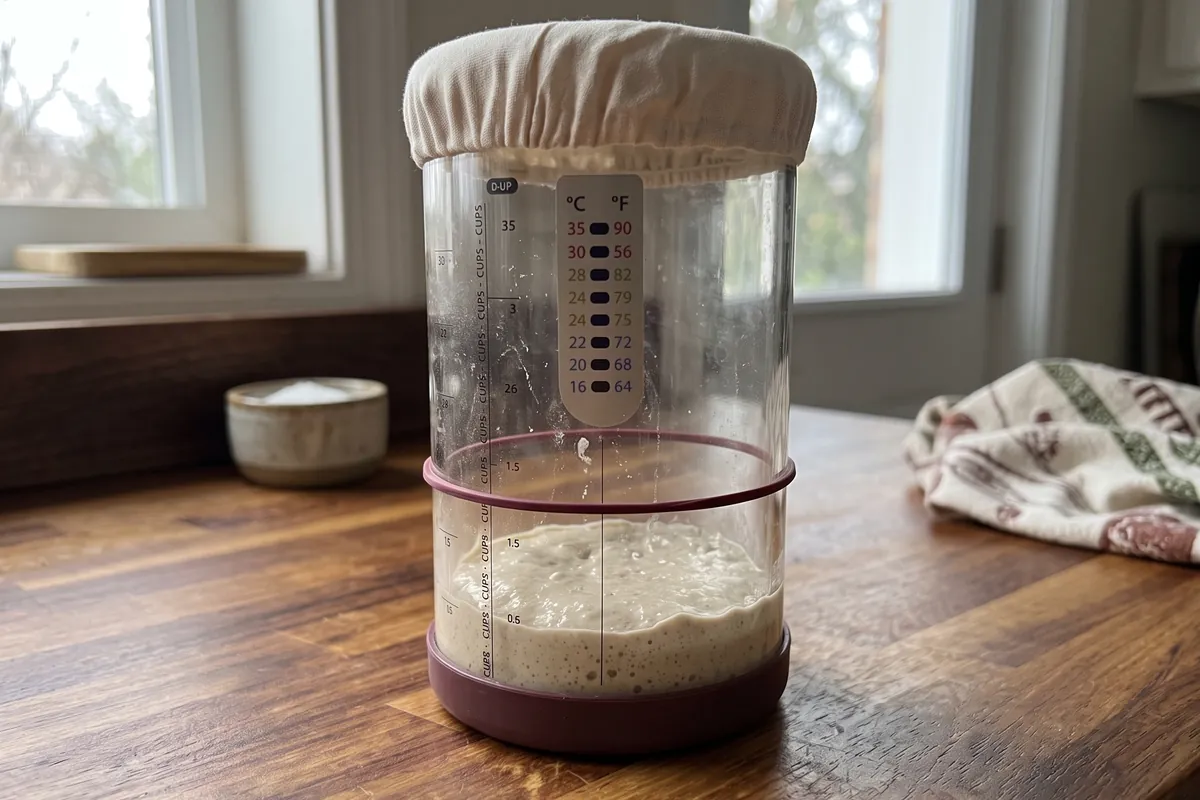
1. Temperature — the number one cause
Wild yeast is temperature-driven. Below about 21°C (70°F), activity slows dramatically, and in a cold kitchen a perfectly alive starter can look stone dead. This is the first thing to fix because it's the most common and the easiest.
- Aim for 21–26°C (70–79°F).
- Warm spots: inside the oven with only the light on (check it doesn't get hot), on top of the fridge, near a radiator (not on it), or in a turned-off microwave with a mug of just-boiled water.
- If your whole home is cold, expect a slower rhythm and lean on the 1:2:2 feeding below.
Not sure which cause is yours? BakeSide reads your starter from a single photo — tell it your temperature, smell and last feed, and it tells you the most likely reason it isn't rising and the exact next step. Get BakeSide free →
2. Feeding — is it getting enough, often enough?
An underfed or inconsistently fed starter can't build the population it needs to rise. Two things matter: ratio and consistency.
- Feed at a 1:2:2 ratio (1 part starter, 2 parts flour, 2 parts water by weight) — a good strengthening ratio.
- Feed on a schedule: once or twice a day at roughly the same times, not whenever you remember.
- Weigh everything. Cups are wildly inconsistent for starter.
Rule of thumb: warmth wakes a starter up; consistent feeding keeps it strong. You usually need both.
3. Age — is it just young?
A brand-new starter, or one under about two weeks old, is expected to be erratic: a burst of activity around days 3–4, then an apparent stall, then a slow build to reliability by weeks 2–3. This "false start then quiet" phase fools a lot of new bakers into thinking they've failed. You haven't — keep feeding warm and consistent, and give it time.
4. Flour and water — the quiet culprits
If temperature, feeding, and age all check out, look at your ingredients:
- Flour: very old or highly refined flour ferments slowly. Switch to fresh flour and add a portion of rye or whole wheat — they carry more wild microbes and reliably speed a sluggish starter up.
- Water: heavily chlorinated tap water can hold a culture back. Use filtered water, or leave tap water out overnight so the chlorine dissipates — note this doesn't remove chloramine, which many city supplies now use, so if in doubt use filtered water.
BakeSide's take. For a sluggish, low-activity starter the fix lands on the same three moves again and again: move it somewhere warmer, feed more often at 1:2:2, and use fresh flour with filtered water — exactly the sequence above.
Still nothing after 3–5 days?
Then it's dormant, not dead — and dormant starters revive. Follow the day-by-day revival routine: discard down to a spoonful, feed 1:2:2 every 12 hours, keep it warm, and watch for small bubbles by day 2 and a clear rise by days 3–5. See the full revival guide →
Genuinely throw it out only if you see fuzzy or raised mold of any colour, or pink/orange streaks (don't scrape), or smell something rotten — not just sharp or acetone-like, which is simply hunger. A flat, dry white film is just kahm yeast — skim it and keep feeding.
Frequently asked questions
Why is my sourdough starter not rising?
Most often it's too cold, underfed, or too young — not dead. Fix the causes in order: get it to 21–26°C, feed consistently at 1:2:2, give a young starter time, then check your flour and water.
How long should it take for my starter to rise?
At around 24°C a mature starter peaks 4–8 hours after feeding. Cold kitchens stretch that to 10–12+ hours, and a starter under two weeks old can be slow and erratic while still being healthy.
Is my starter dead if it hasn't risen in days?
Almost certainly not. Correct temperature and feeding first; if it's still flat after a few days it's dormant, not dead, and the revival routine brings it back. Only discard for fuzzy or raised mold, pink/orange streaks, or a genuinely rotten smell.
What temperature does a sourdough starter need to rise?
Aim for 21–26°C (70–79°F). Below about 21°C yeast activity drops sharply, which is the single most common reason a healthy starter looks lifeless.
Does rye or whole-wheat flour help a slow starter?
Yes. Rye and whole wheat carry more wild microbes and reliably speed up a sluggish starter — add a portion for a feed or two along with filtered water.
About the makers
BakeSide is made by the team behind Superbaking, a community of 500,000+ home bakers. Its starter guidance comes from real baking and from the thousands of starter photos BakeSide users send for feedback. Every guide here is written from that hands-on experience and human-edited.
Not sure what you're looking at?
BakeSide reads your starter from a single photo — tell it your temperature, smell and last feed, and it tells you exactly what to do next.